
Legal Planning for Older Adults: Practical Advice for Lifelong Security
Asenqua Tech is reader-supported. When you buy through links on our site, we may earn an affiliate commission.
Table of Contents
- Understanding Elder Law
- Essential Legal Documents
- Medicaid and Long-Term Care Planning
- Protecting Against Financial Exploitation
- Estate Planning and Asset Protection
- Legal Considerations for Caregivers
- Consulting an Elder Law Attorney
- Conclusion
As individuals approach their later years, preparing for future legal and financial needs becomes critically important. Legal planning ensures that personal wishes and healthcare preferences are upheld, and that assets are protected from unforeseen risks. Guidance on elder law is essential for those seeking clarity on how best to navigate the complex legal landscape that often accompanies aging. Comprehensive planning not only benefits older adults but also greatly assists their families along the way.
Older adults face unique legal challenges related to health, personal autonomy, and long-term care expenses. Thoughtful preparation can safeguard finances, ease the burden on loved ones, and ensure crucial decisions are made appropriately. Whether you are planning for yourself or helping an aging parent, understanding the legal framework is key to lifelong security.
Effective legal planning takes into account more than just financial security. It involves ensuring that healthcare choices, final wishes, and the transfer of responsibilities are clearly documented and legally recognized. Without these precautions, families can find it difficult to make decisions during times of crisis. Taking proactive steps now can lead to peace of mind in the future.
For many, the process starts with compiling vital legal documents, consulting with professionals, and addressing potential vulnerabilities before they become serious problems. This guide will help you navigate each area of concern, from preparing for long-term care to choosing the right legal representatives.
Additionally, those looking to structure the transfer of wealth or designate future guardians will find structured solutions through resources on estate planning. As family structures and asset portfolios grow more complex, tailored strategies that address all contingencies become even more important.
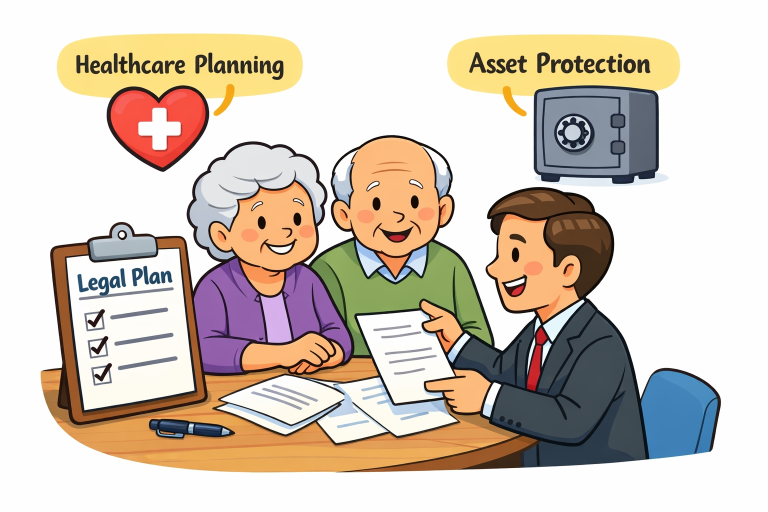
Understanding Elder Law
The field of elder law addresses the distinct legal concerns of seniors, including estate administration, healthcare directives, and protection against elder abuse. It incorporates legal practices designed to safeguard older adults during vulnerable periods in life. Understanding the basics sets a strong foundation for more specific legal planning. More information can be found in this AARP guide to financial and legal caregiving.
Essential Legal Documents
The first step in safeguarding legal and financial interests is securing the following documents:
- Wills and Trusts: Specify asset distribution and outline intentions after death.
- Durable Power of Attorney: Appoints someone to manage finances if the individual becomes incapacitated.
- Healthcare Proxy: Authorizes a trusted party to make healthcare decisions when necessary.
- Living Will: Communicates medical care wishes for end-of-life circumstances.
Having these instruments in place promotes a smooth transition of responsibilities and ensures the wishes of the older adult are legally upheld. Families should regularly revisit and update documents as life circumstances change.
Medicaid and Long-Term Care Planning
Long-term care represents one of the most significant expenses seniors may face. Medicaid is designed to assist with these costs, but qualifying for the program often requires preemptive planning, such as restructuring assets and understanding the five-year look-back period for asset transfers. Without these precautions, individuals may face financial hardship if unexpected care is needed. Educational resources like this Kiplinger guide on paying for long-term care can provide helpful context as you begin preparing.
Protecting Against Financial Exploitation
Financial exploitation is a growing risk for older adults, with scammers and even acquaintances seeking to take advantage of vulnerability. Some precautions include:
- Regularly checking bank and credit accounts for unfamiliar transactions.
- Guarding personal information and being skeptical of unexpected solicitations.
- Assigning a reliable person to help oversee finances, if needed.
- Staying informed about the latest scams that target seniors.
For those wanting more information about how to identify and avoid exploitation, check out the Federal Trade Commission’s elder fraud resource.
Estate Planning and Asset Protection
Protecting assets and providing for loved ones after death is a primary concern for many seniors. Good estate planning involves:
- Drafting clear wills that outline exactly how property and assets should be distributed.
- Creating trusts to control and safeguard certain assets.
- Assigning beneficiaries to retirement and insurance accounts.
- Periodically reviewing the estate plan to keep it current with life changes.
Comprehensive plans reduce the burden on families, minimize tax liabilities, and help ensure an individual’s wishes are respected. For a detailed checklist, refer to this Kiplinger estate planning checklist.
Legal Considerations for Caregivers
Caregivers often manage not only day-to-day tasks but also critical legal and financial responsibilities. They should:
- Understand their legal rights and duties within the caregiving role.
- Familiarize themselves with relevant support services and community resources.
- Make use of durable powers of attorney and healthcare proxies to carry out their responsibilities smoothly.
When caregivers are informed about legal factors, they are better equipped to advocate for and protect the interests of the seniors they care for. For more insights, consider this Kiplinger survival guide for the sandwich generation.
Consulting an Elder Law Attorney
Legal professionals with experience in elder law can help families create tailored strategies for asset protection, Medicaid eligibility, and the effective handling of sensitive family or financial matters. They assist in drafting the necessary documents, explaining the implications of each choice, and providing ongoing support if disputes arise or laws change.
Conclusion
Being proactive about legal planning brings clarity, security, and comfort to older adults and their loved ones. Equipping yourself with the proper documents, knowledge, and professional help ensures that financial assets, healthcare preferences, and personal wishes will be honored now and well into the future.