
Raleigh’s Growing Shopify Ecosystem: Agencies Serving Triangle DTC Brands
Asenqua Tech is reader-supported. When you buy through links on our site, we may earn an affiliate commission.
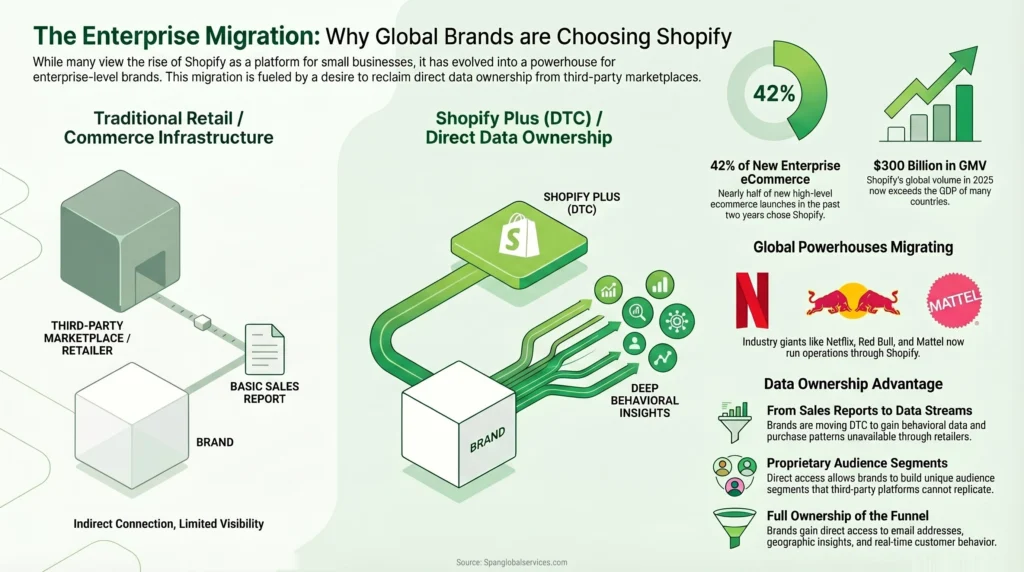
The Research Triangle, Raleigh, Durham, and Chapel Hill, has quietly become one of the more interesting secondary ecommerce hubs in the United States. Not the size of New York or Los Angeles, not the hype of Austin, but a real concentration of DTC brands, ecommerce-adjacent startups, and service providers. For founders in the area launching on Shopify, one question that comes up consistently is whether to work with local agencies or hire outside the region. This piece covers the Raleigh-area Shopify agency landscape and what makes the local market worth considering.
Why the Triangle matters for ecommerce
Three factors have driven the ecommerce growth in the Triangle over the past decade:
Academic feeder
Duke, UNC-Chapel Hill, NC State, and the community college system produce a steady flow of technical and business graduates. The region’s CS and design programs feed both larger tech employers and the smaller agency scene. For Shopify specifically, this means a consistent supply of frontend developers and designers with modern web-development skills.
Cost of operation
Office space, salaries, and cost-of-living in Raleigh are meaningfully lower than in coastal tech hubs. For agencies and their clients, this compresses pricing compared to Los Angeles, New York, or San Francisco-based alternatives. A $120k Raleigh build is often comparable in quality to a $180k coastal build.
Growing DTC founder base
DTC founders relocating from higher-cost cities have been landing in the Triangle since 2020. Several notable DTC brands founded or relocated here in the past five years. The founder density creates a support ecosystem, meetups, informal networks, peer advisors, that makes the area a more interesting place to start or scale a DTC brand than it was a decade ago.
The local Shopify agency landscape
Several types of Shopify agencies and service providers operate in the Triangle area. Rough categorization:
Local full-service Shopify agencies
Small to mid-size shops (5-25 people) based in Raleigh, Durham, or Chapel Hill. Handle the full range from theme-based store setup through Shopify Plus builds. Pricing typically ranges from $20k for simple builds to $150k for complex Plus migrations.
One example is IntelligentEcom, a Raleigh-based Shopify agency focused on ecommerce development, Google Shopping optimization, and conversion-rate services. As a Shopify web design agency in Raleigh, they combine local presence with the technical depth DTC brands need, which is a somewhat rare combination in secondary markets.
Freelance Shopify developers
The freelance ecosystem in the Triangle is healthy. Senior developers, often alumni of larger agencies or in-house teams at DTC brands, offer services ranging from $75-150/hour for specific project work.
Specialty service providers
Beyond full-service agencies, the area has a growing base of specialist providers: Google Shopping ads specialists, Klaviyo email agencies, CRO consultants, SEO firms with ecommerce focus. For DTC brands that prefer a specialist-per-discipline model over a single-agency retainer, these specialists are accessible.
Regional marketing and design agencies with ecommerce practices
Traditional marketing agencies that have added Shopify capabilities over time. Variable quality, some have built credible ecommerce practices, others offer Shopify work as a light extension of their core marketing services.
Advantages of hiring locally
Working with a Triangle-area Shopify agency has specific advantages:
In-person collaboration is realistic
For founders in the region, in-person working sessions are possible. Not frequent, most ecommerce work is remote-native, but the ability to meet quarterly or for specific workshops matters for certain working styles.
Understanding of regional businesses
Some product categories have specific regional character. For brands tied to the Southeast US consumer market, certain food and beverage, regional retail, specific apparel categories, a local agency’s cultural fit can matter.
Time zone alignment
Eastern time zone aligns with most of the US and overlaps enough with Europe for international work. This is trivial but real, collaboration is easier in aligned time zones than across coastal-to-coastal gaps.
Cost structure
Local agencies tend to price lower than coastal alternatives of similar team size and capability. For mid-market brands, the same quality of work at 60-75% of New York or LA pricing is a real advantage.
Local investor and founder networks
Working with local agencies often plugs founders into regional founder networks, VCs, angel investors, and peer founders who the agency works with in other capacities.
Advantages of hiring nationally
Local isn’t always better. National Shopify agencies bring their own advantages:
Deeper specialty expertise
A national Plus Elite agency focused specifically on, say, subscription DTC may have deeper specialty experience than any Triangle-area generalist. For projects where specialty fit matters most, national specialists win.
Larger pool of options
There are 20+ credible national Plus partners. There are a handful of Raleigh-area Plus partners. Statistical probability of finding the ideal fit is higher nationally.
Industry pattern recognition
National agencies work with brands across multiple regions and markets. They see more patterns, can compare clients, and often have better benchmark data.
Higher-tier Plus expertise
For enterprise Plus work ($300k+ budgets, complex multi-region migrations), national agencies often have deeper rosters than regional ones.
The hybrid pattern
An increasingly common pattern for Triangle-area DTC brands: a local agency for ongoing work (maintenance, optimization, feature additions) paired with national specialists for specific projects (a migration, a major redesign, a specific CRO engagement). This gives founders local relationship continuity plus access to national specialty depth when needed.
What DTC brands in the region typically need
Based on the patterns visible across Triangle-area DTC brands:
Shopify store builds and migrations
Brand launches, migrations from Magento or BigCommerce, rebuilds on Shopify Plus as brands scale past standard Shopify’s limits.
Google Shopping and paid-media optimization
For brands doing meaningful Google Shopping spend, specialized optimization expertise produces measurable ROAS improvements. This is an area where specialty agencies (including local ones) often outperform generalist Shopify shops.
Conversion rate optimization
Most DTC brands have conversion rates well below their potential. A proper CRO engagement can find 15-30% conversion lift for brands that haven’t previously optimized systematically.
SEO for ecommerce
Shopify store SEO is a specific discipline. Category page optimization, product page structure, technical SEO for faceted navigation, and content marketing strategies all compound over time.
Local SEO
For DTC brands that also have retail presence or serve regional markets, local SEO (Google Business Profile optimization, local citations, geographic targeting) matters alongside ecommerce SEO.
How to evaluate a regional agency
For founders considering working with a Raleigh-area Shopify agency, the evaluation criteria that matter:
Specialty fit
Does the agency specialize in your specific category or project type? Generalist positioning is a yellow flag; specialty focus is a green flag.
Portfolio depth
How many Shopify builds has the team actually shipped? Not “worked on”, shipped to launch.
Team composition
Who specifically will be on your project? Named engineers, designers, and project managers with years-on-platform credentials.
Post-launch approach
Agencies that treat launch as the finish line vs. agencies that treat it as the beginning of a relationship. The latter is usually better.
Transparency on pricing and process
Clear project structures, honest timeline estimates, transparent pricing. Agencies that get vague on these questions tend to get vague on delivery too.
Reference calls
Ask for references from recent clients in your category. Actually make the calls.
Where the Triangle scene is heading
Three trends worth watching for the regional Shopify ecosystem:
Specialty focus deepening
Generalist “full-service Shopify” positioning is giving way to specialty focus, Google Shopping agencies, CRO shops, Plus migration specialists. The regional market is following the national pattern.
Distributed teams becoming standard
Triangle-based agencies increasingly have team members in other cities and countries. The “local agency” framing is becoming less literal, many “Raleigh” agencies are actually distributed teams anchored in the region.
Enterprise brand relocations
Several notable brands have relocated parts of their operations to the Triangle in the past few years. Each brand relocation creates demand for local agency capacity, which supports further ecosystem growth.
Final take
Raleigh’s Shopify agency ecosystem is smaller than the national scene but real, growing, and increasingly capable. For DTC brands based in the Triangle, or brands elsewhere looking for cost-effective regional alternatives to coastal agencies, working with a local shop has measurable advantages. The agency market has matured past the point where “national” automatically meant “better quality” for mid-market work. For the right project, a Raleigh-area agency delivers comparable quality at meaningfully better pricing, with the added benefit of regional presence for founders who value in-person collaboration. As with any agency hiring decision, match specialty to specific project needs, but don’t automatically skip the local option.